
Understanding the REIWA Commercial Lease Agreement PDF
REIWA’s standardized PDF document facilitates commercial property rentals within Western Australia, offering a clear, legally compliant framework for landlords and tenants alike.

What is the REIWA Commercial Lease Agreement?
The REIWA Commercial Lease Agreement is a legally binding contract meticulously designed for commercial property leasing specifically within Western Australia. It serves as a comprehensive document outlining the rights, responsibilities, and obligations of both landlords and tenants involved in a commercial lease arrangement. This standardized agreement, created by the Real Estate Institute of Western Australia (REIWA), aims to provide clarity and minimize potential disputes.
It’s crucial to understand that this agreement is tailored for non-retail commercial properties – encompassing spaces like offices, warehouses, and industrial facilities. It differs from agreements governing retail tenancies, which fall under the Commercial Tenancy (Retail Shops) Agreements Act 1988. The REIWA form provides a structured approach to defining key lease terms, ensuring a legally sound foundation for the tenancy.

Scope: Non-Retail Commercial Properties
The REIWA Commercial Lease Agreement explicitly focuses on non-retail commercial properties, meaning it’s designed for leasing spaces excluding those covered by retail tenancy legislation. This encompasses a wide range of properties, including offices, warehouses, factories, industrial units, and other commercial spaces not primarily intended for direct consumer retail.
It’s vital to differentiate this from the Commercial Tenancy (Retail Shops) Agreements Act 1988, which provides specific protections for retail tenants. The REIWA form doesn’t fall under this Act, offering different terms and conditions. Therefore, businesses operating retail shops or providing retail services should utilize a different lease agreement. The REIWA form is ideal for business-to-business arrangements and commercial activities not directly involving the public’s retail purchases.
REIWA Membership and Access
Access to the official REIWA Commercial Lease Agreement PDF is primarily facilitated through REIWA membership. While the agreement is widely recognized and used in Western Australia, it’s specifically designed for use by REIWA members – real estate professionals affiliated with the Real Estate Institute of Western Australia.
However, even non-members can gain access through REIWA’s digital platform, REI Forms Live. This system provides customizable, legally compliant document templates, including the Commercial Lease, available for completion and use on-the-go. REI Forms Live offers a convenient way to obtain and adapt the agreement, ensuring it meets specific needs. Utilizing this platform ensures access to the most current and legally sound version of the REIWA Commercial Lease Agreement.

Key Components of the Agreement
The REIWA Commercial Lease Agreement meticulously details crucial elements like lease duration, rental amounts, outgoing expenses, and security deposit stipulations.
Lease Term and Commencement Date
Defining the lease term and commencement date within the REIWA Commercial Lease Agreement is paramount. The agreement explicitly states the period for which the tenant has the right to occupy the premises, typically expressed in years, with options for renewal often included. The commencement date marks the official start of the lease, triggering the tenant’s obligations, such as rent payments and adherence to property usage guidelines.
Careful consideration should be given to these dates, as they directly impact the financial and operational planning for both parties. The agreement should clearly outline any specific conditions precedent to the commencement date, such as the completion of fit-out works or the obtaining of necessary permits. A well-defined lease term provides stability for the tenant and predictable income for the landlord, fostering a mutually beneficial relationship throughout the lease duration.
Rent and Payment Details
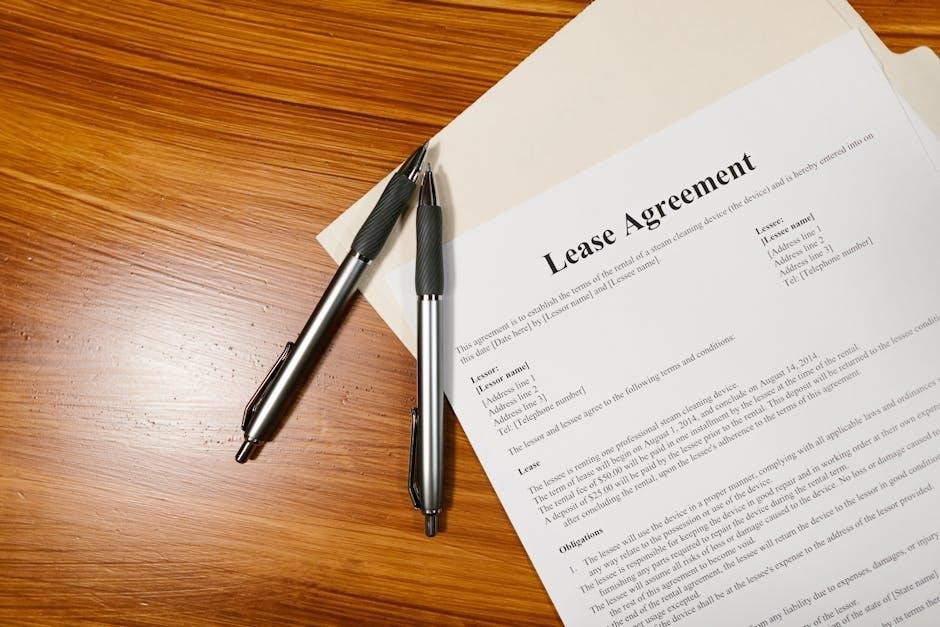
The REIWA Commercial Lease Agreement meticulously details all aspects of rent and payment. This includes the base rental amount, whether it’s gross or net, and the frequency of payments – typically monthly or quarterly. The agreement specifies the accepted methods of payment, such as electronic funds transfer or cheque, and outlines any late payment penalties or interest charges.
Furthermore, the document addresses potential rent reviews, detailing the method for determining adjustments, which could be based on market rates, CPI, or a pre-agreed formula. Clear articulation of these financial terms is crucial to avoid disputes. The agreement also clarifies whether the stated rent includes GST and the respective responsibilities for its remittance, ensuring full transparency and compliance with tax regulations.
Outgoings and Additional Costs
The REIWA Commercial Lease Agreement comprehensively addresses outgoings – the operational costs associated with the property beyond base rent. These typically encompass council rates, water rates, strata fees (if applicable), building insurance, and property management fees. The agreement clearly defines which party, landlord or tenant, is responsible for each outgoing, and the method for calculating the tenant’s proportional share, often based on the leased area’s percentage of the total property area.
It also details procedures for providing the tenant with statements of outgoings and timelines for payment. Importantly, the agreement should specify any exclusions from outgoings, such as capital improvements. Understanding these cost allocations is vital for accurate budgeting and avoiding unexpected financial burdens for both landlord and tenant, fostering a transparent and equitable leasing arrangement.
Security Deposit
The REIWA Commercial Lease Agreement meticulously outlines the terms surrounding the security deposit, a crucial element protecting the landlord against potential tenant defaults or property damage. The agreement specifies the deposit amount, typically expressed as a monetary sum or a percentage of the annual rent. It details the conditions under which the landlord can legitimately claim against the deposit, such as unpaid rent, repair costs exceeding normal wear and tear, or breach of lease covenants.
Furthermore, the agreement clarifies the process for the deposit’s return to the tenant at the lease’s conclusion, including timelines and requirements for providing a detailed statement of any deductions made. Adherence to these stipulations ensures a fair and legally sound handling of the security deposit, minimizing potential disputes between landlord and tenant.

Landlord and Tenant Responsibilities
REIWA’s agreement clearly defines each party’s duties, encompassing property maintenance for landlords and responsible usage alongside lease compliance for tenants.
Landlord’s Obligations: Repairs and Maintenance
The REIWA Commercial Lease Agreement meticulously outlines the landlord’s responsibilities regarding property upkeep. Generally, landlords are obligated to maintain the structural integrity of the premises, ensuring the roof, walls, and essential building systems are in good working order. This includes addressing issues like leaks, structural defects, and maintaining common areas if applicable.
The agreement typically specifies a timeframe for rectifying reported repairs, preventing undue disruption to the tenant’s business operations. Routine maintenance, such as plumbing and electrical servicing, also falls under the landlord’s purview. However, it’s crucial to note that the REIWA form allows for negotiation regarding specific repair responsibilities; tenants may agree to handle certain minor maintenance tasks.
Landlords must ensure repairs are carried out by qualified professionals, adhering to all relevant building codes and safety standards. Proper documentation of all maintenance and repair work is highly recommended, providing a clear record of compliance with the lease terms.
Tenant’s Obligations: Property Use and Compliance
The REIWA Commercial Lease Agreement clearly defines the tenant’s permitted use of the leased premises. Tenants are obligated to operate their business in a manner consistent with this specified use, and any deviation may constitute a breach of the agreement. Furthermore, tenants must comply with all applicable laws, regulations, and council ordinances related to their business operations.
This includes obtaining necessary licenses and permits, adhering to health and safety standards, and ensuring responsible waste disposal. The agreement often stipulates that tenants are responsible for maintaining a safe working environment within their leased space.
Tenants are also typically responsible for any damage to the property caused by their negligence or the actions of their employees or customers. Maintaining the internal cleanliness of the premises is generally a tenant obligation. Careful review of permitted use clauses is vital to avoid future disputes.
Insurance Requirements
The REIWA Commercial Lease Agreement typically outlines specific insurance requirements for both the landlord and the tenant. Generally, the tenant is required to maintain public liability insurance, covering potential claims arising from their business operations on the premises. This insurance must be to a value stipulated within the agreement, protecting against third-party injury or property damage.
Tenants may also be required to insure their own contents, including stock, equipment, and improvements made to the property. The landlord, conversely, usually maintains insurance coverage for the building itself.
The agreement will detail requirements for providing proof of insurance to the landlord, often including certificates of currency. It’s crucial for tenants to understand these obligations to ensure adequate coverage and avoid potential breaches of the lease.

Specific Clauses to Review Carefully
REIWA Commercial Lease Agreements contain vital clauses regarding assignment, renewal options, and termination, demanding thorough review before signing to protect interests.
Assignment and Subletting
The REIWA Commercial Lease Agreement meticulously addresses the tenant’s ability to assign the lease or sublet the property. Typically, the landlord’s written consent is required for both actions, and this consent is not to be unreasonably withheld. However, the agreement will likely outline specific conditions under which consent can be legitimately refused, such as concerns about the proposed assignee’s financial stability or business type.
Carefully examine the clauses detailing any associated fees for consent or assignment. Some agreements may allow the landlord to retain a portion of any premium received by the tenant upon assignment. Furthermore, understand if the lease stipulates that the original tenant remains liable for the obligations of the assignee or subtenant, even after assignment or subletting. This is a crucial point for risk management. Reviewing these stipulations ensures clarity and prevents potential disputes down the line.
Options to Renew
REIWA Commercial Lease Agreements often include options allowing the tenant to renew the lease for an additional term. These options are typically exercised by providing written notice to the landlord within a specified timeframe before the lease expiry date – often several months in advance. The agreement will detail the process for exercising this option, including the required form of notice and the address for delivery.
Critically, examine how the rental rate is determined during the renewal period. It might be a fixed amount, linked to market rent determined by a valuation, or subject to a pre-agreed percentage increase. Understand the implications of each method. Also, clarify if the renewal option is exclusive, meaning the landlord cannot offer the property to other parties during the option period. Thoroughly reviewing these clauses is vital for long-term business planning.

Termination Clauses and Break Lease Provisions
REIWA Commercial Lease Agreements outline conditions under which either party can terminate the lease before its natural expiry. Standard clauses often address breaches of contract, such as failure to pay rent or non-compliance with property use stipulations. These typically require a notice period allowing the defaulting party to rectify the issue.
“Break lease” provisions allow the tenant to terminate the lease prematurely, often subject to penalties like forfeiture of the security deposit or payment of remaining rent. Carefully review these penalties. The agreement should specify the notice period required for a break lease and any conditions attached. Landlords may also have specific termination rights, potentially linked to redevelopment plans. Understanding these clauses is crucial for mitigating financial risks associated with early lease termination.

Using the PDF and REI Forms Live
REI Forms Live streamlines REIWA form usage, offering customizable, legally compliant document templates accessible on the go for efficient lease management.
Customizing the Template
REIWA’s Commercial Lease Agreement PDF isn’t a static document; REI Forms Live allows for significant customization to suit specific property and tenancy arrangements. Users can populate fields with relevant details, tailoring clauses to reflect negotiated terms between landlord and tenant. This includes adjusting lease terms, specifying rent amounts and payment schedules, and detailing responsibilities for outgoings.
The system facilitates modifications to insurance requirements, security deposit amounts, and specific clauses related to assignment, subletting, and renewal options. Customization ensures the agreement accurately reflects the unique aspects of each commercial lease, minimizing potential disputes. It’s crucial to carefully review each section and modify it to align with the agreed-upon terms, creating a legally sound and comprehensive lease document. Properly customized templates enhance clarity and protect both parties’ interests.
Legal Compliance and Updates
REIWA prioritizes legal compliance with its Commercial Lease Agreement PDF. The document templates within REI Forms Live are designed to align with current Western Australian legislation regarding commercial tenancies. However, laws are subject to change, so regular updates are vital. REIWA proactively updates its forms to reflect these amendments, ensuring users have access to legally sound documents.
Users should remain vigilant and confirm the template’s currency before each use. Staying informed about changes to commercial tenancy legislation is crucial for both landlords and tenants. Utilizing the latest version of the REIWA agreement minimizes the risk of non-compliance and potential legal challenges. Accessing updated templates through REI Forms Live provides peace of mind and safeguards against outdated clauses.
Document Templates Availability
REIWA provides access to its Commercial Lease Agreement PDF and other related document templates primarily through REI Forms Live, a unique system designed for quick, easy, and confident form completion. This platform offers legally compliant templates that can be customized, populated, and completed on the go, streamlining the leasing process.
Access to REI Forms Live and its associated templates is generally available to REIWA members. The system allows for efficient creation and dispatch of REIWA’s forms and agreements. While a standard commercial lease form doesn’t universally exist, REIWA’s offering provides a robust solution for its members. Utilizing this resource ensures access to professionally drafted, up-to-date lease agreements tailored for Western Australian properties.

Negotiating the Agreement
Successfully navigating a REIWA Commercial Lease requires understanding your rights, seeking legal counsel, and being aware of Western Australia’s commercial tenancy laws.
Seeking Legal Advice
Engaging a solicitor specializing in commercial property law is paramount when dealing with a REIWA Commercial Lease Agreement PDF. These agreements are complex, and a legal professional can meticulously review the document, identifying potential pitfalls and ensuring your interests are protected. They can explain the implications of each clause, particularly regarding rent, outgoings, and termination provisions.
A solicitor can also advise on necessary amendments to the standard REIWA form to better suit your specific business needs and circumstances. Don’t hesitate to ask questions and seek clarification on any aspect you don’t fully understand. Legal counsel provides invaluable support during negotiations, helping you achieve favorable terms and avoid costly disputes down the line. Remember, preventative legal advice is far more cost-effective than resolving issues after they arise.
Understanding Your Rights and Remedies
A REIWA Commercial Lease Agreement PDF outlines specific rights and remedies for both landlords and tenants. Tenants should familiarize themselves with clauses concerning property use, repairs, and rent adjustments. Understanding your obligations regarding property maintenance and compliance with regulations is crucial. Should disputes arise, the agreement details processes for mediation or legal action.
Landlords also have defined rights, including access for inspections and the ability to enforce lease terms. Knowing your remedies for breaches of contract – such as unpaid rent or property damage – is essential. Western Australian legislation provides further protections, so awareness of Commercial Tenancy laws is vital. Proactive understanding empowers you to navigate potential issues effectively and protect your interests within the lease framework.
Commercial Tenancy Legislation in Western Australia
Western Australia’s Commercial Tenancy (Retail Shops) Agreement Act 1988 doesn’t directly govern all REIWA Commercial Lease Agreements, as the REIWA form is primarily for non-retail properties. However, general contract law and other relevant legislation, like the Property Law Act 1969, apply. Understanding these laws is crucial, even when using the standardized REIWA document.
Key aspects of WA legislation include provisions regarding dispute resolution, assignment of leases, and rent reviews. While the REIWA agreement provides a framework, statutory requirements must be met. Seeking legal advice ensures compliance with all applicable laws. Awareness of these regulations empowers both landlords and tenants, fostering a fair and legally sound leasing arrangement within the Western Australian context.